B2B marketing automation workflows that drive growth
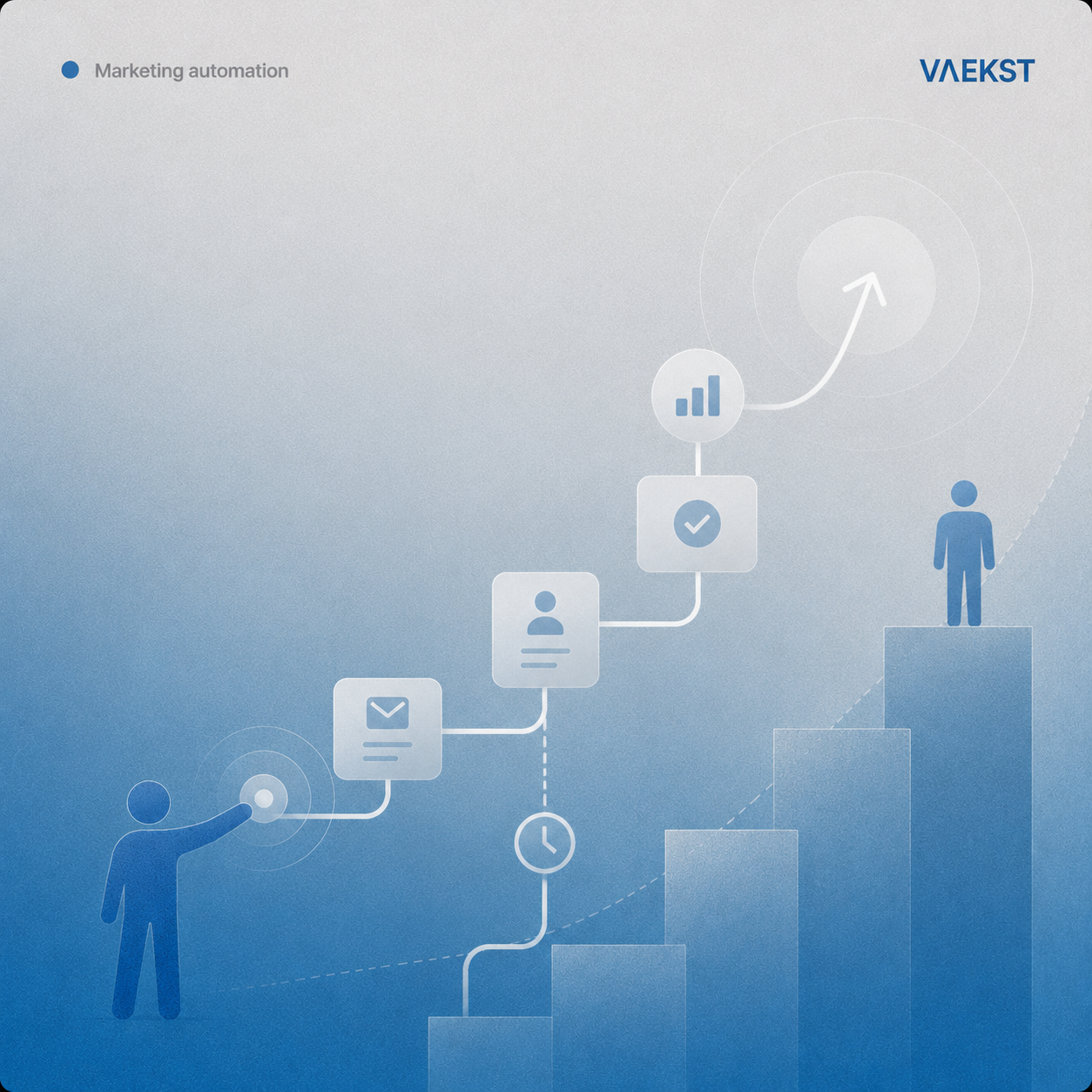
B2B marketing automation workflows create real commercial value when they connect buyer behaviour with pipeline movement. Many companies use marketing automation to send nurture emails, score leads and route contacts to sales. The setup often looks organised inside the platform, but performance depends on whether the workflows reflect how B2B buyers actually move through a decision process.
In complex B2B sales, buyers rarely convert because they received one well-timed email. They convert when marketing and sales work from the same commercial logic, using automation to support relevance, timing and follow-up quality. The best workflows help commercial teams understand which accounts are showing intent and when sales should act. That is where automation starts to influence the pipeline.
Why b2b marketing automation workflows underperform
Marketing automation often underperforms when workflows are built around internal assumptions rather than buyer signals. A common example is the lead nurture sequence: a contact downloads a guide, receives a fixed email journey and is passed to sales after reaching a certain score.
The process is easy to build, but too rigid for complex B2B buying. Sales may receive leads with activity but little buying intent, while marketing misses the chance to shape the commercial context sales needs for a relevant conversation.
Effective B2B marketing automation workflows should connect workflow design to pipeline quality by helping teams answer practical sales questions:
- Are the right accounts becoming more relevant right now?
- Are senior contacts engaging with commercially meaningful topics?
- Do recent behaviours suggest a need for sales follow-up?
- Where should marketing support the buyer journey before outreach?
Four b2b marketing automation workflows built around the buying journey
Before building anything in HubSpot or another marketing automation platform, the commercial team needs to define what the workflow is meant to influence. A useful starting point is to map the buyer journey around moments of commercial movement, such as when a target account moves from passive awareness to active research, or when several contacts from the same company begin engaging with related topics.
These moments give automation a clearer role. The workflow can then help educate the buyer, alert sales, enrich CRM data or create a more relevant next step. The following four workflows are useful starting points for B2B companies that want their B2B marketing to support pipeline quality directly through automation.
Workflow 1: intent-based lead nurture
An intent-based nurture workflow should adapt to what the buyer is showing interest in. Instead of sending the same email sequence to every lead, the workflow should segment contacts based on role, account fit, content topic and engagement depth. A CFO engaging with ROI content should not receive the same journey as an operations lead reading implementation material.
A more useful structure could include a:
- First email that expands on the topic the contact engaged with
- Second touchpoint that introduces a related commercial challenge
- Sales alert if the contact engages with high-intent pages or repeated content
- CRM update that records topic interest for future outreach
This gives marketing and sales a better view of what the buyer is actually exploring. For example, if a senior stakeholder downloads a guide on sales enablement and later visits pages related to CRM optimisation, the workflow should not treat that as generic engagement.
Workflow 2: account-based engagement alerts
B2B buying decisions often involve several stakeholders, and individual lead scoring will miss this point if it focuses too narrowly on one contact. Account-based engagement workflows help solve this by looking at behaviour across the company. If multiple contacts from the same target account engage with relevant content within a short period, the workflow can alert sales and update the account priority. This is particularly valuable for account-based marketing, where the commercial focus is already on a defined list of high-value accounts. In this setup, automation helps sales and marketing identify when a target account is moving from general awareness to active consideration. A good account-based workflow might track:
- Engagement from several contacts at the same company
- Visits to product, service or pricing-related pages
- Interaction with content linked to a strategic business pain
- Return visits from previously inactive contacts
The goal is to help sales identify accounts where interest is becoming more visible. This type of workflow works best when marketing and sales agree on what meaningful engagement looks like. A single newsletter click is rarely enough. Several relevant behaviours from the right account should carry more weight.
Workflow 3: sales follow-up enablement
One of the most overlooked uses of marketing automation is improving the quality of sales follow-up. When a lead is passed to sales, the handover often includes basic information such as name, company and source. That is rarely enough to create a good first conversation. A sales follow-up workflow should give the salesperson practical context before they reach out. This could include the content the lead engaged with, the business topic behind that content, recent website behaviour and suggested talking points.
For example, a workflow could trigger when a high-fit lead engages with a bottom-of-funnel page. The system will then be able to:
- Notify the relevant salesperson
- Add recent engagement history to the CRM
- Suggest a relevant outreach angle
- Create a follow-up task with a clear deadline
This reduces the gap between marketing activity and sales action. Speed matters, but context matters just as much. A fast follow-up with a generic message can weaken the buyer experience. A timely follow-up with a relevant commercial perspective gives the sales team a better chance of starting a meaningful dialogue.
Workflow 4: lost opportunity reactivation
Lost opportunities are often one of the most underused sources of future pipeline. A deal may have been lost because the timing was wrong, budget was delayed, priorities changed or internal alignment was missing. None of those reasons necessarily mean the account will never buy. Here, a reactivation workflow will help monitor and re-engage these accounts when new signals appear.
The workflow might be triggered by renewed website activity, content engagement from a former opportunity, a change in company size or a new senior stakeholder entering the CRM. When the signal appears, marketing should support the account with relevant content while sales receives the context needed to re-open the conversation. This type of workflow works particularly well when the lost reason is captured properly in the CRM. If every closed-lost deal is marked vaguely, automation has little to work with. If the reason is specific, the reactivation journey can be much more relevant.
What to measure beyond email performance
B2B marketing automation workflows should be evaluated through commercial outcomes. Email metrics can show whether the content is getting attention, but they do not prove that the workflow is improving pipeline. Commercial teams should look at how workflows influence sales readiness, conversion quality and deal movement. Useful metrics include:
- Lead-to-SQL conversion rate
- Meeting acceptance rate from workflow-influenced leads
- Pipeline created from automated nurture journeys
- Opportunity progression from reactivated accounts
These metrics help marketing move closer to revenue impact, and they create a better feedback loop with sales. If a workflow generates high engagement but poor meeting quality, the targeting or scoring model may need adjustment. On the other hand, if a workflow produces fewer leads but higher conversion, it may be doing exactly what the business needs.
How to build better b2b marketing automation workflows
Better workflows usually come from tighter alignment between marketing operations, sales leadership and the salespeople speaking to buyers every day. Before building a new workflow, ask:
- What commercial behaviour should this workflow respond to?
- Which buyer signal makes the workflow relevant?
- What should sales know before taking action?
- How will we measure whether the workflow improves pipeline quality?
The workflow should also be reviewed regularly. Buyer behaviour changes, messaging evolves and CRM data quality can decline if nobody maintains the system. Marketing automation is most valuable when it is treated as part of the commercial engine, not as a one-time setup inside the platform. For companies using HubSpot, this often means reviewing lifecycle stages, lead scoring rules, workflow triggers and sales notifications together. Small improvements in these areas can have a visible impact on conversion quality.
Turning automation into pipeline movement
B2B marketing automation workflows convert when they help marketing and sales act with better timing and better context. The most valuable workflows are built around buyer signals, account relevance and sales follow-up quality. They help teams prioritise the right accounts, understand what buyers care about and move faster when commercial intent becomes visible.
For B2B companies with complex sales cycles, automation should support the full buyer journey from early engagement to reactivation. When workflows are connected to pipeline logic, they become a practical tool for improving conversion rather than another layer of marketing activity.
Explore how VAEKST helps B2B companies connect marketing automation, HubSpot optimisation, account-based marketing and sales enablement to improve pipeline performance.
Let's have a chat about your GTM
Have a virtual cup of coffee with one of our sales experts to explore collaboration opportunities.