How to drive a B2B account expansion strategy
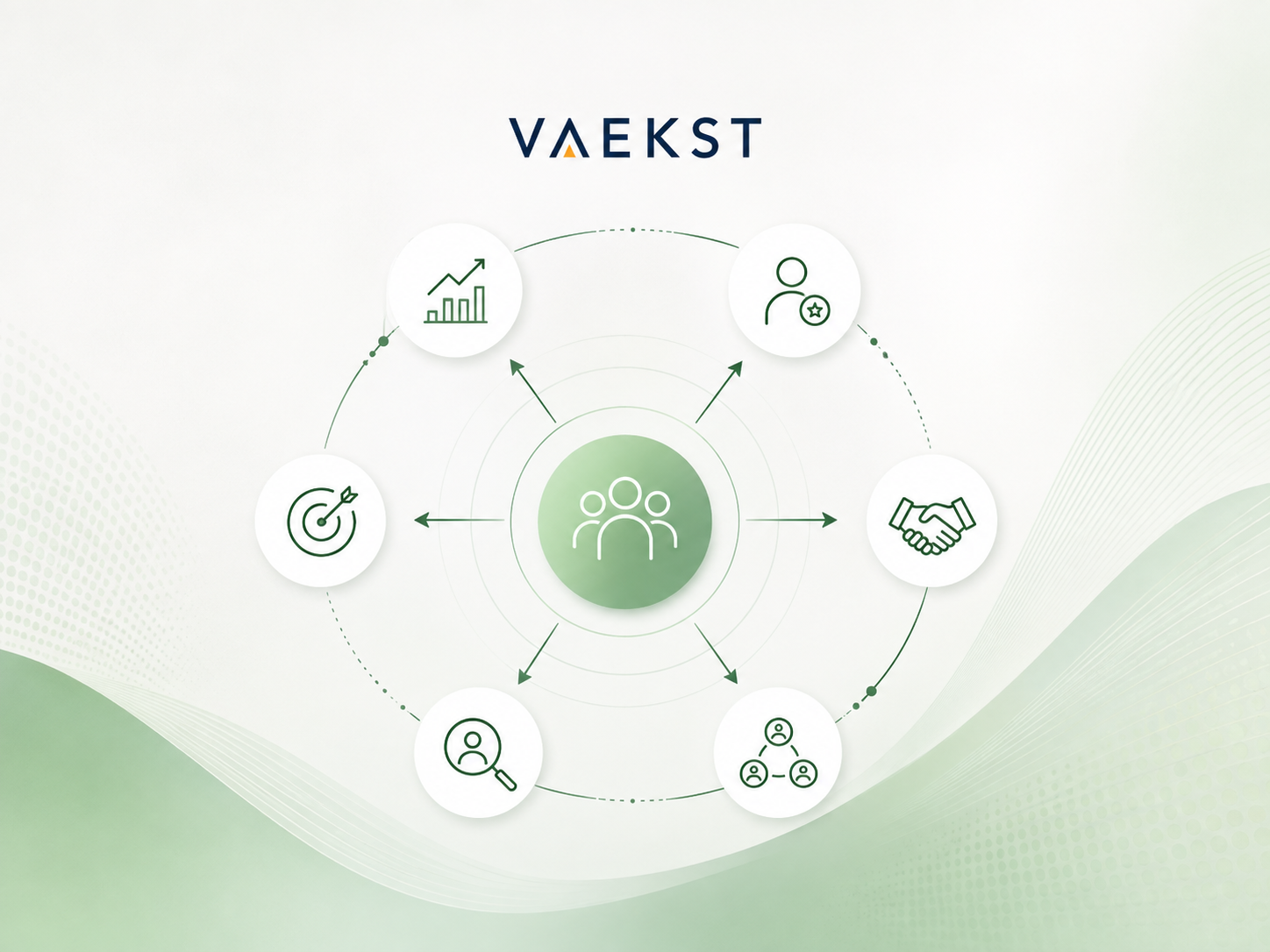
Existing customers often provide the most credible revenue opportunities in B2B sales. They alreadyknow your delivery model and have internal proof that your solution can create value. Yet many companies treat expansion revenue too casually. Upsell and cross-sell opportunities are left to customer success, account managers or senior sales profiles without a shared commercial system behind them.
A well-defined b2b account expansion strategy gives commercial teams a structured way to identify where growth can come from, which accounts deserve focus and how to create new demand inside existing relationships.
For ambitious B2B companies, expansion is one of the most practical ways to improve revenue quality. Existing relationships can shorten sales cycles and create better internal access, but they still need structure. This article shows how to prioritise the right accounts, identify upsell and cross-sell opportunities and turn customer insight into qualified sales conversations.
Why account expansion is often underdeveloped
Many B2B organisations focus heavily on new logo acquisition because it is visible, measurable and easy to connect to pipeline targets. Expansion revenue, however, can appear more organic, which makes it easier to underestimate. The problem is that expansion rarely happens consistently without a clear operating model. Account managers often see where the opportunity sits, but lack the sales process to develop it. Customer success teams are close to adoption and satisfaction, yet hesitate to introduce commercial conversations. Sales teams bring the commercial skill, but need better visibility into usage patterns, stakeholder dynamics and internal change inside the account.
This creates gaps across the customer journey. A buyer might be ready for a broader solution, another department may have the same pain, or a new executive sponsor may be open to a strategic discussion. Without structure, those signals are easy to miss.
Build your b2b account expansion strategy around account potential
Not every customer account deserves the same commercial attention. Some accounts are valuable but unlikely to expand. Others may look modest today, yet have clear potential across regions or use cases. Start by segmenting your existing accounts based on expansion potential rather than current revenue alone. Useful criteria include:
- Size of the organisation and addressable buying centres
- Existing adoption, satisfaction and delivery outcomes
- Strategic fit with your ideal customer profile
- Internal stakeholder access and relationship strength
- Observable triggers such as restructuring, funding, new leadership or market expansion
This prevents account expansion from becoming a generic “check in and see what happens” activity. The commercial team can focus attention on the accounts where expansion is most commercially relevant.
Identify the expansion path before you pitch
Upsell and cross-sell require a different commercial logic. Upsell is usually about going deeper. The account already uses part of your solution, but there is room to increase scope, functionality, volume or strategic involvement. The commercial conversation often centres on maturity, underused potential and the cost of staying at the current level.
Cross-sell is about going wider. The relationship exists in one part of the organisation, but other teams, departments or regions could benefit from a related service or solution. Here, the challenge is often internal navigation. You need to move from one known stakeholder to a broader buying group. Before approaching the account, define the expansion path clearly and ask:
- Where does the account already see value?
- Which business outcome has been proven?
- Who else inside the organisation is likely to care about that outcome?
- What has changed since the original buying decision?
- Which internal proof points can reduce perceived risk?
Use account-based marketing to widen influence
Expansion revenue depends heavily on internal visibility. In complex B2B accounts, your current contact is rarely the only person who matters. Procurement, finance, operations, regional leadership, technical decision-makers and executive sponsors may all influence whether expansion happens. This is where account-based marketing becomes valuable.
For existing accounts, ABM should help increase familiarity with new stakeholders, reinforce strategic value and create warmer conditions for commercial outreach. The goal is to make the account more aware of the problems you solve before the sales conversation begins. Practical ABM motions for expansion include:
- Targeted LinkedIn engagement towards relevant stakeholders
- Account-specific content based on known business priorities
- Executive outreach supported by customer proof
- Web tracking to identify renewed interest from the account
- Coordinated messaging between marketing, sales and customer success
Turn customer insight into sales conversations
A b2b account expansion strategy should be grounded in evidence including adoption data, delivery outcomes, stakeholder feedback, support tickets, CRM notes and meeting insights which all contain commercial signals. The challenge is turning those signals into timely action.
For example, heavy usage of one module can indicate readiness for a more advanced solution. Repeated requests for strategic input from a professional services client can point towards a broader retainer opportunity. Industrial accounts expanding into new markets often need similar support across other regions. These signals should feed into structured sales plays.
This is where disciplined B2B sales infrastructure matters. Expansion opportunities need clear qualification, defined next steps and proper pipeline management. Without that structure, they remain informal account notes rather than measurable revenue opportunities. A useful qualification lens could include:
- Business impact: what outcome could expansion improve?
- Stakeholder access: who needs to be involved?
- Trigger event: why should the conversation happen now?
- Internal proof: what value has already been created?
- Commercial fit: is the opportunity worth pursuing?
Create expansion plays for different account types
A scalable expansion model needs repeatable plays. These plays should reflect the account’s maturity, usage, buying structure and strategic importance. For example, a B2B SaaS company might define one play for high-usage accounts with limited feature adoption, another for enterprise accounts with regional expansion potential and a third for accounts showing renewed website engagement from senior stakeholders.
A professional services firm might build expansion plays around service-line adjacency. If one department has bought commercial strategy support, another may need sales enablement, outbound execution or HubSpot optimisation. Each play should define:
- The account signal that triggers action
- The stakeholder group to engage
- The value narrative to use
- The proof point that supports credibility
- The desired next step
Align customer success, sales and marketing
Expansion revenue often suffers when ownership is unclear. Customer success is usually closest to the relationship, sales is responsible for developing the opportunity, and marketing can support awareness and influence across the buying group. The model only works when each function understands its role and knows when an account should move from relationship management into active commercial development.
A well-functioning operating model clarifies when an account becomes commercially active. Customer success brings signals from usage, satisfaction and stakeholder feedback into the process, while sales qualifies the opportunity and drives the next commercial steps. Marketing supports the wider account journey through content, retargeting, social selling and executive visibility.
CRM hygiene becomes critical here. If account notes, stakeholder maps, renewal dates, product usage and expansion opportunities live in separate places, forecasting becomes unreliable. A clear CRM structure helps leadership understand which accounts have real expansion potential and which opportunities need attention.
Making expansion revenue more predictable
A commercially disciplined b2b account expansion strategy turns existing relationships into a structured growth channel. The work starts with account segmentation, continues through sales plays and becomes measurable through CRM discipline, stakeholder mapping and clear ownership. To improve upsell and cross-sell performance, focus on:
- Prioritising accounts based on expansion potential
- Defining the right expansion path before outreach
- Using account-based marketing to widen stakeholder influence
- Turning customer insight into qualified sales conversations
- Aligning sales, marketing and customer success around clear plays
Existing accounts already contain trust. The commercial opportunity is to turn that trust into structured, relevant and well-timed expansion conversations. Explore how VAEKST helps B2B companies strengthen B2B sales and account-based marketing to grow revenue from both new and existing accounts.
Let's have a chat about your GTM
Have a virtual cup of coffee with one of our sales experts to explore collaboration opportunities.