B2B sales for consulting firms
How Consulting Firms Can Move Beyond Referrals and Build Predictable Pipeline
Many consulting firms in the Nordics enjoy strong reputations, long-standing client relationships and high brand recognition in their niches. Yet even the most respected firms often experience pipeline fluctuations and a heavy dependency on partner-led referrals.
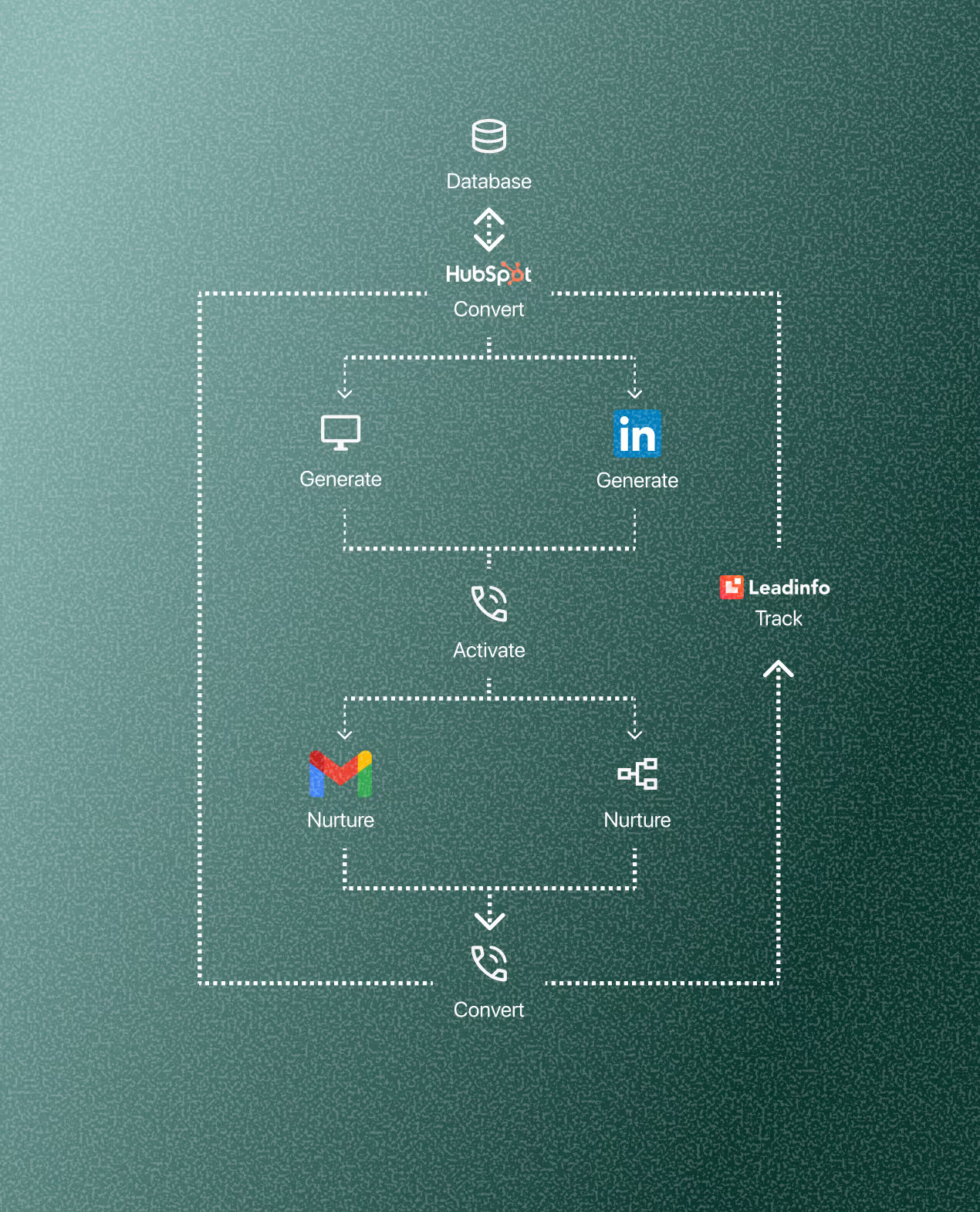
This is solvable. Scalable b2b sales for consulting firms requires a commercial structure that connects brand, marketing and outbound sales to deliver sales execution in one, holistic system - here, we use real life cases to showcase how this can be done.
The core shift: from reputation to activation
Referrals are valuable as they convert well and often lead to good customer engagements. However, they are difficult to forecast predictably, hard to scale across markets and rarely allow you to shape the buying agenda early on. This introduces a lot of uncertainty.
Across Nordic consulting firms growth journeys, the same pattern appears.
Firms with strong positioning reach a commercial plateau when pipeline creation depends primarily on networks and inbound interest.
Growth accelerates only when outreach becomes structured and insight-led in the shape of challenger sales.
This shift from passive reputation to an active outbound market engagement is central to have modern b2b sales. You can see this transition reflected in how firms such as Venzo, NJORD and Adapt strengthened their commercial engines by combining structured outbound sales execution with internal capability building.
Step 1: Translate positioning into a structured commercial blueprint
Scalable b2b sales for consulting firms begin with clarity around Segmentation, Targeting and Positioning.
This means defining:
- Which industries and company sizes generate the highest long-term value
- Which triggers indicate readiness to engage
- Which stakeholders influence buying decisions
- Which strategic pains your offering uniquely addresses
From here, you develop a commercial playbook that translates brand DNA into daily execution. This includes messaging pillars, clear hooks, well-defined CTAs and carefully crafted Power Questions designed to initiate executive dialogue.
A structured Go-To-Market approach ensures that outreach, marketing and sales conversations are aligned across Denmark, Sweden and Norway. Instead of isolated efforts, you create one unified narrative that travels consistently across channels and teams.
Step 2: Activate thought leadership through structured outreach
Many consulting firms invest heavily in insight pieces, reports and market analyses, yet these often remain under-leveraged in sales. Predictable b2b sales for consulting firms require that thought leadership becomes a conversation starter, not just a branding exercise - this is the essence of challenger sales.
An always-on outreach model typically combines:
- Phone outreach
- Personalised email sequences
- LinkedIn engagement
- Structured follow-up cadences
This is where Outbound Sales evolves from traditional cold calling into insight-led. Instead of asking for time, you bring a relevant market perspective to the table, share your Point Of View and invite dialogue around it.
In several Nordic cases, including Venzo and Adapt, outbound traction increased significantly once outreach was anchored in clear value propositions and supported by structured CRM tracking.
Structured B2B Lead Generation is not about volume but consistent, relevant and challenging messaging towards clearly defined accounts.
Step 3: Strengthen infrastructure through sales enablement
Firms that scale effectively invest in Sales Enablement to ensure that CRM systems, qualification frameworks and internal processes support growth rather than hinder it.
This often involves:
- Rebuilding pipeline stages for transparency
- Introducing mandatory deal source and priority fields
- Improving company and contact data quality
- Establishing dashboards that visualise performance
- Embedding qualification models such as MEDDICC, PROVES or BANT
When CRM adoption improves and deal hygiene becomes consistent, forecasting confidence increases. Pipeline coverage ratios become visible, win rates can be segmented by service line and resource allocation becomes more precise.
Across the NJORD and Venzo journeys, enhanced structure within HubSpot played a central role in turning commercial effort into measurable results.
Step 4: Align marketing and sales around target accounts
Consulting firms often separate brand building from commercial execution, but predictable b2b sales for consulting firms require a much tighter integration. Aligning sales and marketing can create better momentum and this momentum includes:
- Account-level website tracking
- Decision-maker enrichment
- Clear attribution of deal source
- Continuous feedback between sales conversations and marketing messaging
Through Social Selling, consultants and partners increase familiarity and authority in their chosen segments, which lowers resistance during outreach. When brand awareness and sales activation reinforce each other, the commercial engine becomes self-sustaining!
Step 5: Enable partners without depending on them
Many consultancies rely heavily on senior partners for sales. While partner involvement remains critical, scalable b2b sales distribute responsibility more evenly. This requires training and structured workshops that equip both consultants and partners with:
- Proactive outreach principles
- Structured pipeline management habits
- Clear meeting frameworks
- Qualification discipline
- Strong follow-up routines
In the Adapt and NJORD examples, strengthening internal sales maturity was as important as generating external meetings.
The metrics that create predictability
To move from hope to forecasting discipline, partners should monitor:
- Pipeline coverage ratio
- Win rate by industry and service
- Stage conversion percentages
- Sales cycle length
- Weighted pipeline over the next six months
Industry benchmarks suggest B2B win rates typically range between 15 and 30 percent depending on deal size and complexity. Segmenting your own data reveals where your competitive advantage truly lies.
From strong brand to scalable engine
The journeys of Venzo, NJORD and Adapt illustrate a broader principle: even well-positioned consulting firms accelerate when strategy, systems and execution are integrated.
Professionalising b2b sales for consulting firms involves:
- Establishing a structured Go-To-Market foundation
- Activating insight through disciplined Outbound Sales
- Building scalable infrastructure through Sales Enablement
- Strengthening measurable B2B Lead Generation
- Reinforcing trust through consistent Social Selling
Let's have a chat about your GTM
Have a virtual cup of coffee with one of our sales experts to explore collaboration opportunities.